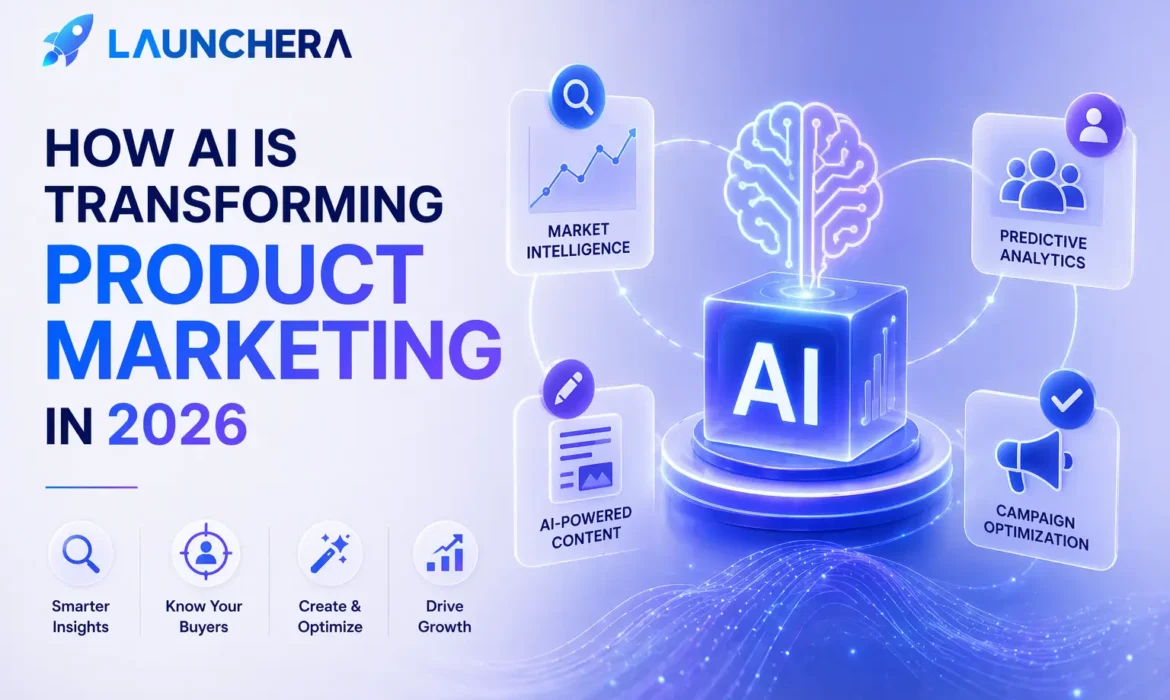
If 2026 were a product marketing conference, AI would be on every stage, every panel, and probably handing out coffee. It’s no longer a futuristic “nice-to-have”—AI is actively reshaping how product marketers work, make decisions, and actually get results. For startups and SaaS companies looking to punch above their weight, understanding and leveraging AI isn’t optional anymore—it’s survival.
AI in Market Research: From Hours to Instant Insights
Remember the days when market research meant endless spreadsheets, surveys, and guessing what your competitors were up to? Yeah, those days are gone. AI tools now allow marketers to perform competitor analysis, track trends, and monitor customer sentiment in real time. Want to know which features your competitor’s users love—or hate—without spending weeks digging? AI can tell you instantly, letting your team focus on the stuff that actually matters: building better products and smarter campaigns.
Predictive Analytics: Know Your Buyers Before They Know Themselves
The holy grail of marketing has always been knowing your buyer better than they know themselves. Enter AI-powered predictive analytics. These tools can identify buyer personas, forecast demand, and even suggest which segment is most likely to convert next. For startups, this is huge: instead of shooting marketing arrows in the dark, AI gives you a laser-guided approach that increases conversion rates, lowers wasted spend, and keeps investors impressed.
AI isn’t just about analysis—it’s about execution, too. From generating landing pages to creating social media content or drafting emails, AI can accelerate your content production while keeping it personalized and relevant. Campaigns can be tested and optimized in real time, with AI recommending tweaks for maximum engagement. Imagine running dozens of A/B tests in the time it used to take to run one. That’s not magic; that’s AI.
In 2026, AI won't just be a cool tool for marketers—it’s the co-pilot guiding every decision, every message, and every launch.”
Jay Cameron
Founder & PMM
Case Examples: AI in Action
These examples aren’t hypothetical—they’re happening now, and they’re redefining what it means to market effectively in a digital-first world.
Startup A used AI-driven sentiment analysis to refine messaging across three markets. Within weeks, engagement rates jumped by 35%
Startup B relied on predictive analytics to forecast demand for a new SaaS tool, allowing them to scale their GTM efforts ahead of competitors. The result? A 25% faster adoption rate post-launch
Startup C leveraged AI for automated content creation, running multiple campaign variations simultaneously. They not only saved hundreds of hours but also increased qualified leads by 40% in the first month.
The Takeaway
AI is no longer a nice-to-have sidekick; it’s becoming the co-pilot for product marketers. From instant market insights to predictive buyer analytics, automated content, and smarter campaigns, AI is enabling marketers to work faster, smarter, and with better results than ever before. For startups, especially SaaS companies, the choice is clear: leverage AI, or risk being left behind in the data-driven marketing revolution.
So, if your GTM strategy in 2026 still looks like it’s powered by spreadsheets and guesswork, it might be time to let AI take the wheel.